
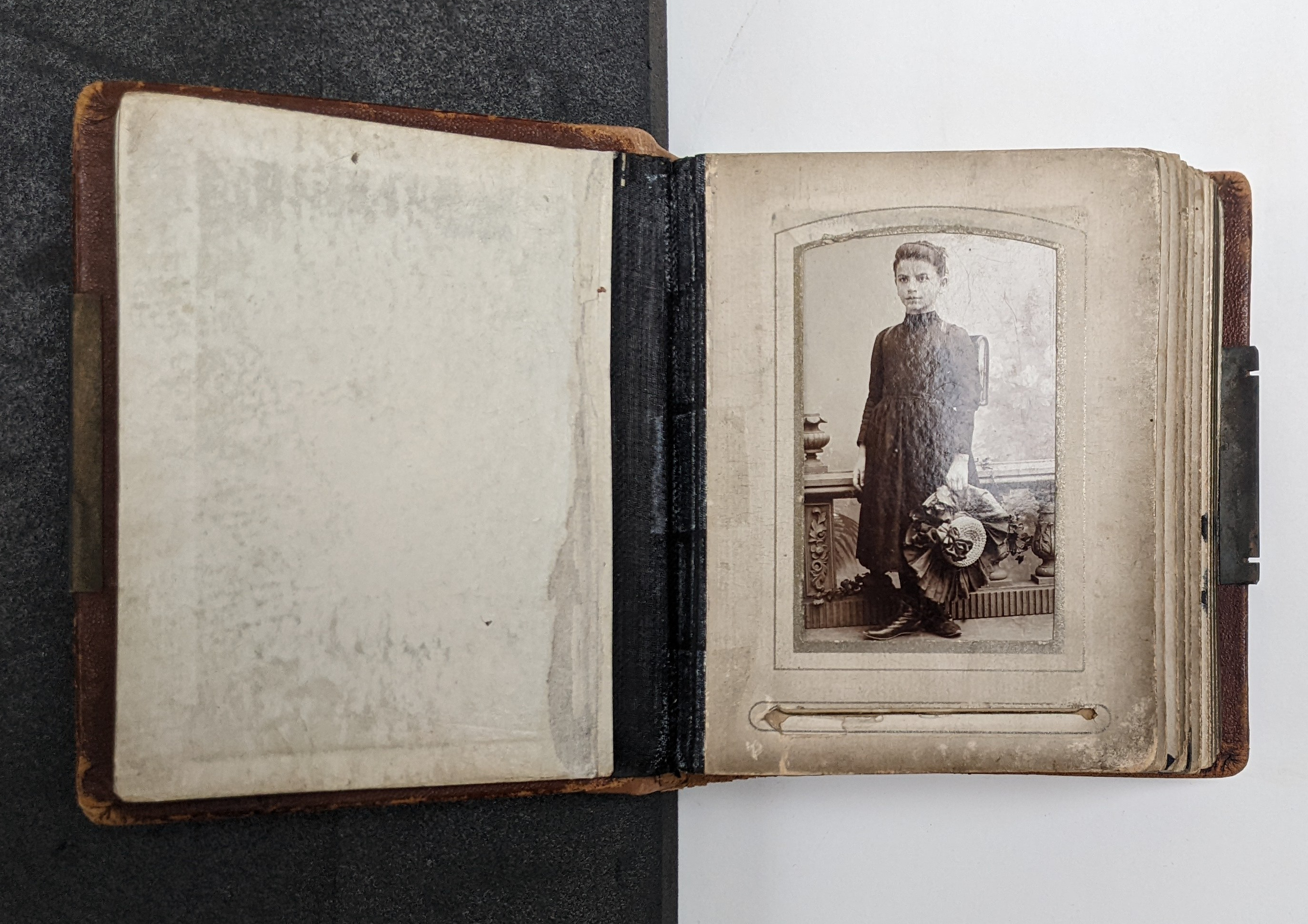
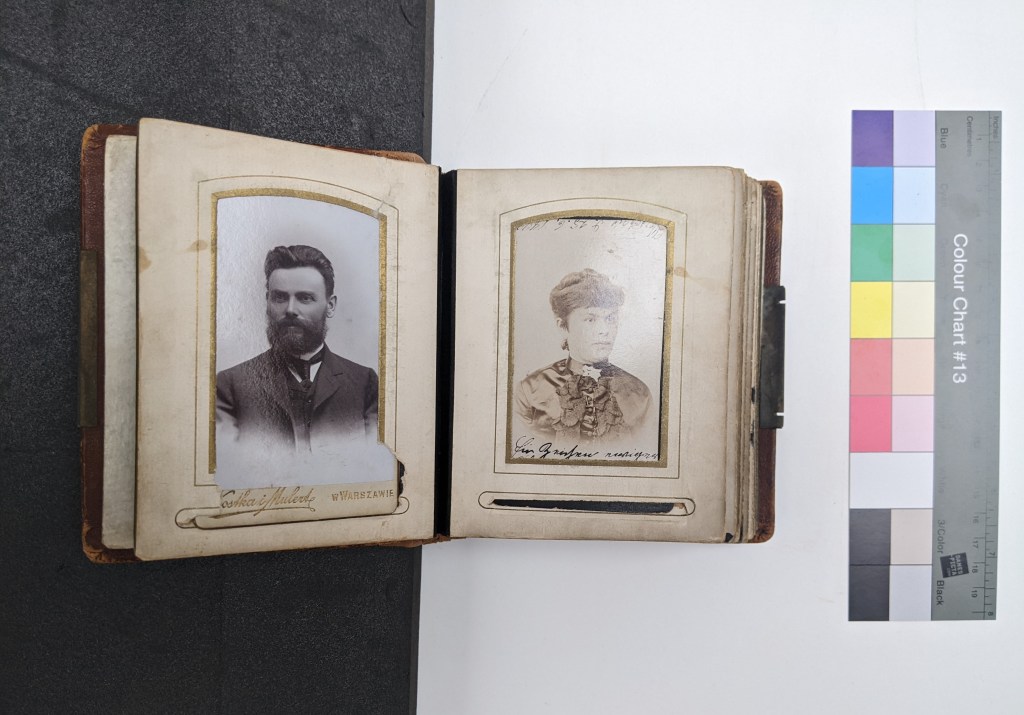
In 2024 I completed a project for the Rambert Ballet Archive, which was generously funded by the National Manuscripts Conservation Trust (NMCT). The work included treating some treasures from the personal family archive of Marie Rambert (20 February 1888 – 12 June 1982), who in 1926 established what would later be called the Rambert Ballet Dance Company, although at the time it was known as Ballet Club.
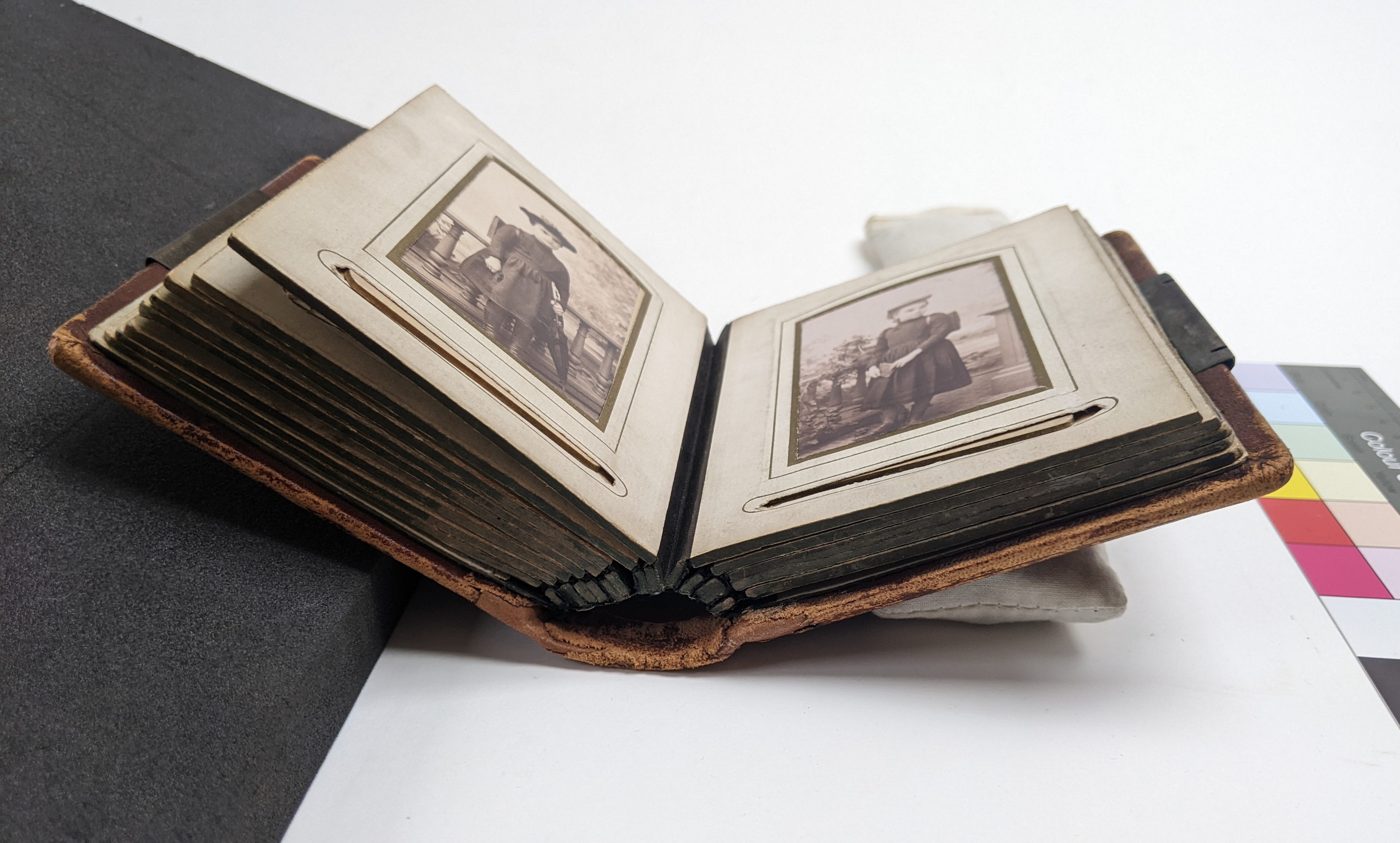
One of the pieces which required conservation was a beautifully small and chunky Carte de Visite photograph album which contained within it some early photographs of members of Marie Rambert’s family. Marie Rambert was born into a Lithuanian Jewish family in Poland
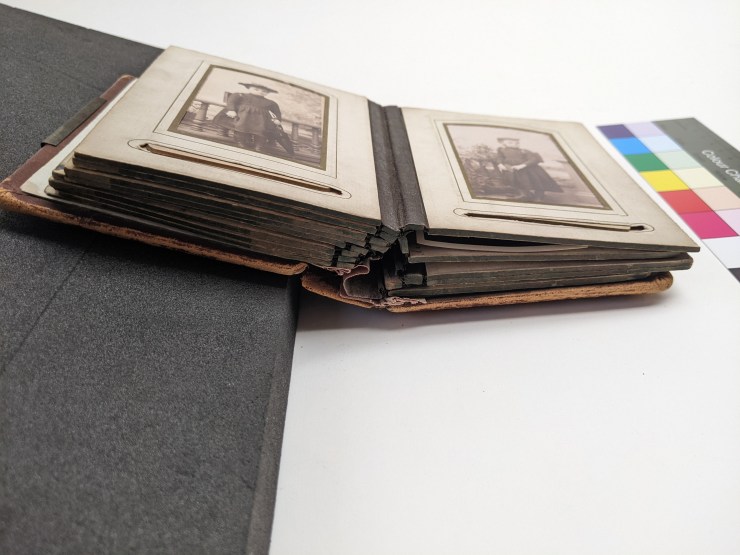
When the book arrived in the studio much of the structure of the book was failing. The construction of the Carte de Visite album relies on the pages of the album flexing on cloth hinges which are adhered to stiff card stubs. The design of this structure means that the stiff pages can open easily for viewing. However with this book many of the cloth guards were splitting and some had come away from their stubs so that the pages were completely unsupported.
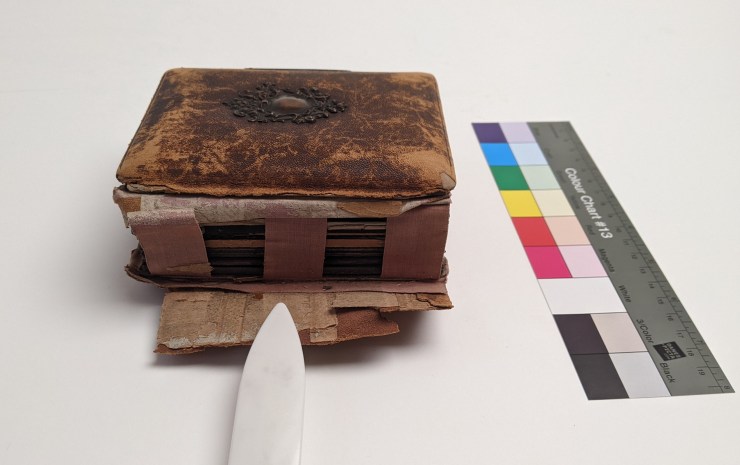
Pink bandage tape had been used at some stage to keep the structure together. The tape was holding the original spine leather and boards on. However it wasn’t properly supporting the structure and wasn’t the right material for the job.
The first step towards treating the book was to remove the bandage tape and clean off the rubbery adhesive residue. On the front page we found the original cloth hinge was still attached to the bookblock underneath the tape, so that once the tape was removed, we could use this hinge to help reattach the front board.
Some of the cloth hinges in the volume were splitting and required reinforcement. The fact that the spine was detached meant it was possible to access the hinges from behind. Localised humidification was used to gently lift the hinges from the leaves and a patch of Asian repair paper which had been toned to match the colour of the hingeing cloth was adhered behind to strengthen the hinges.
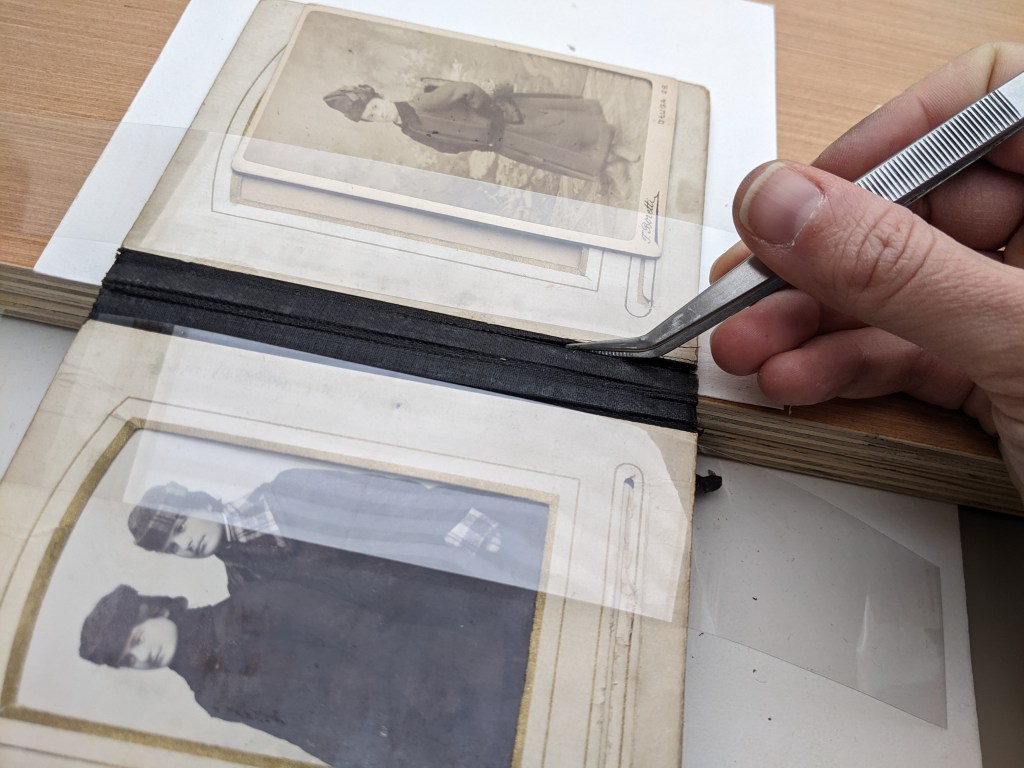
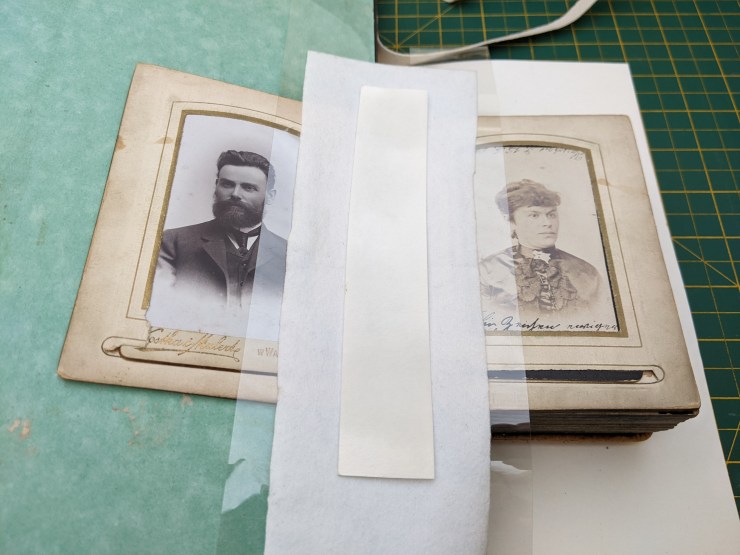
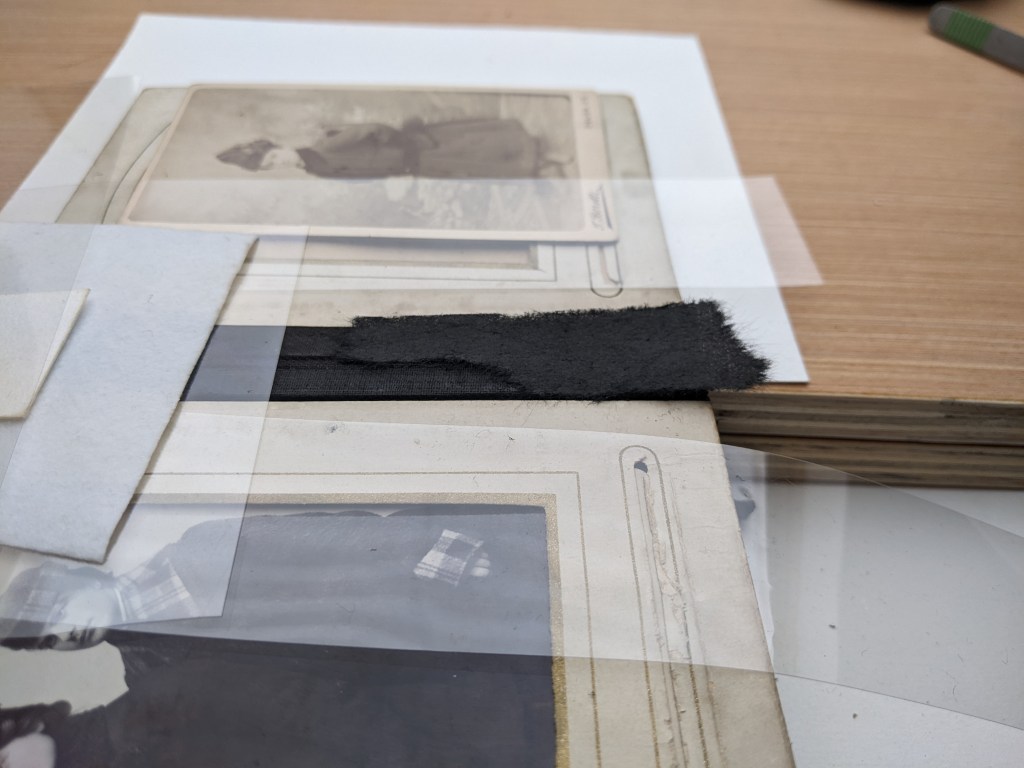
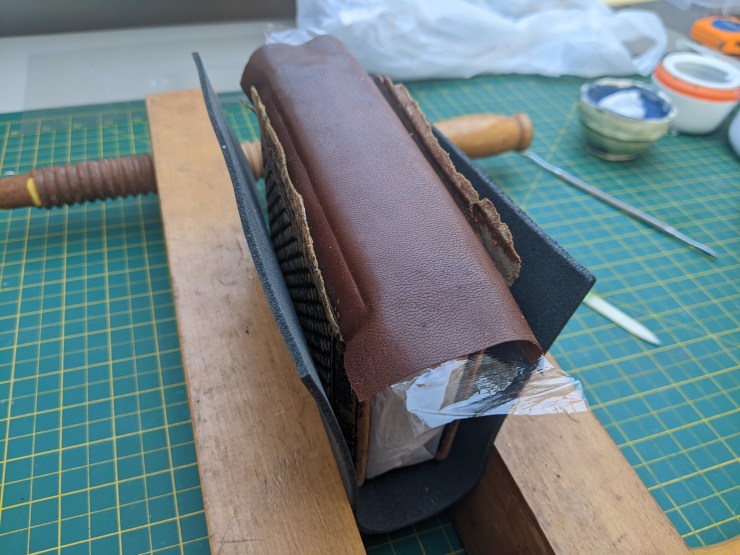
Once the hinges were repaired, I could use a new piece of shaped leather to make a new spine piece for the original leather spice piece to sit on. This leather piece would sit beneath the original cover leather but would give much needed strength and stability to the binding structure.
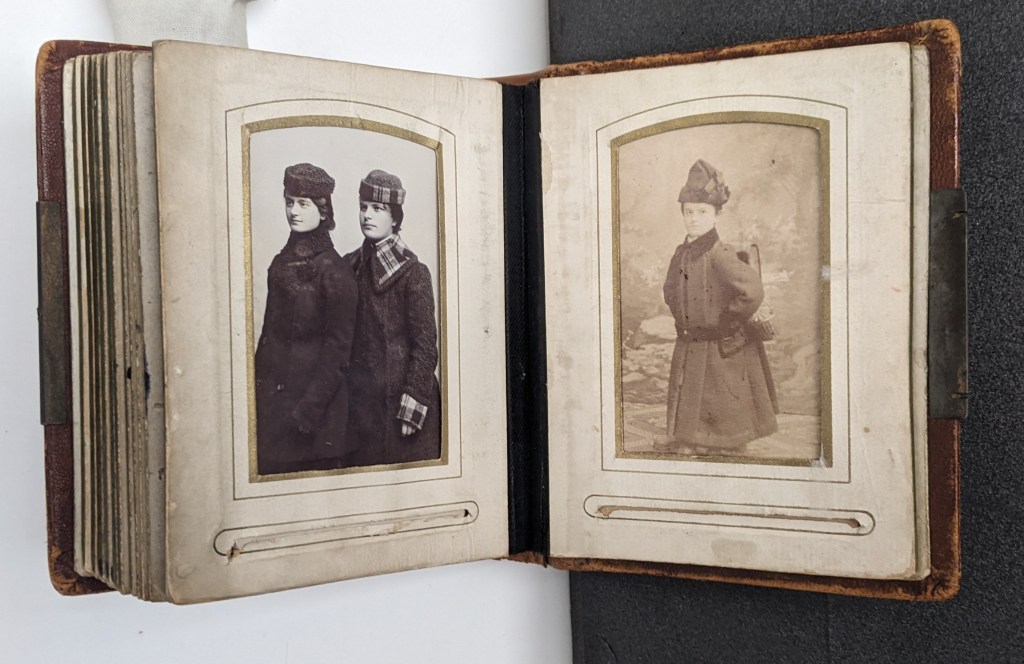
This gallery shows some of the steps – applying the new leather when dampened allows it to more easily be shaped tightly around the spine. As the leather dries, it becomes lighter an colour and also shrinks slightly so that it fits snugly around the book. You can see from the images after treatment was completed how the new leather sympathetically blends in with the original.
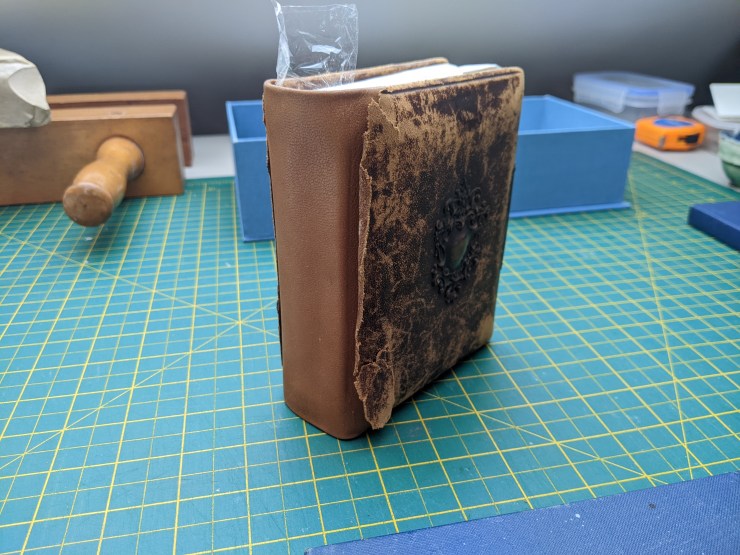
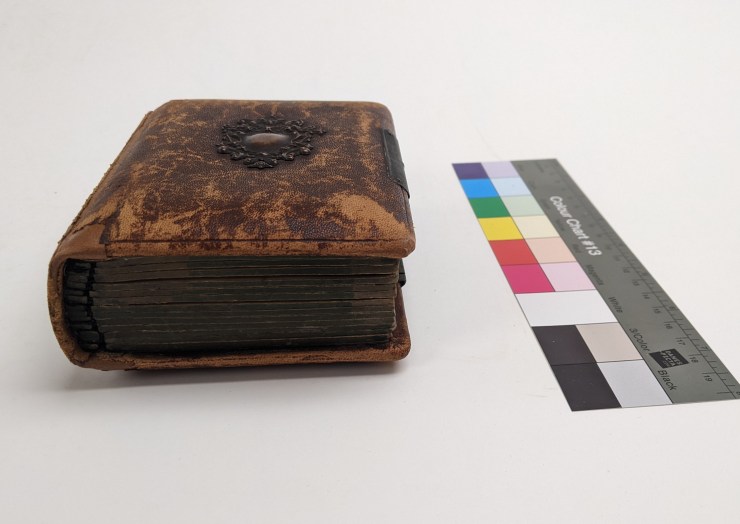
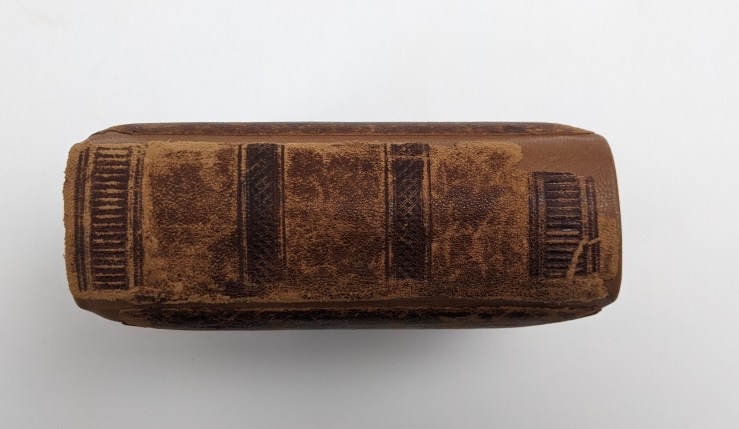


When the book is opened you can really see how the repairs are now supporting the structure. Allowing the pages to open without putting unnecessary pressure or tension on the cloth hinges.

After treatment was completed a bespoke drop spine box was made to protect the book when in storage. There is a foam support built in to the box to ensure there is no abrasion on the cover emblem.

This was such a lovely project to work on and I am so grateful to The Rambert Ballet Archive and the National Manuscript Conservation Trust for the opportunity!
 Holly Smith Book & Paper Conservation